
Know what you own, who has it, and what it has been through.
Equipment tracked as an asset carries its own history — inspections, who holds it, what has been done to it. A QR card on the item opens a tap-to-report route from a scan on site, so a fault is raised by the person holding the thing rather than relayed.
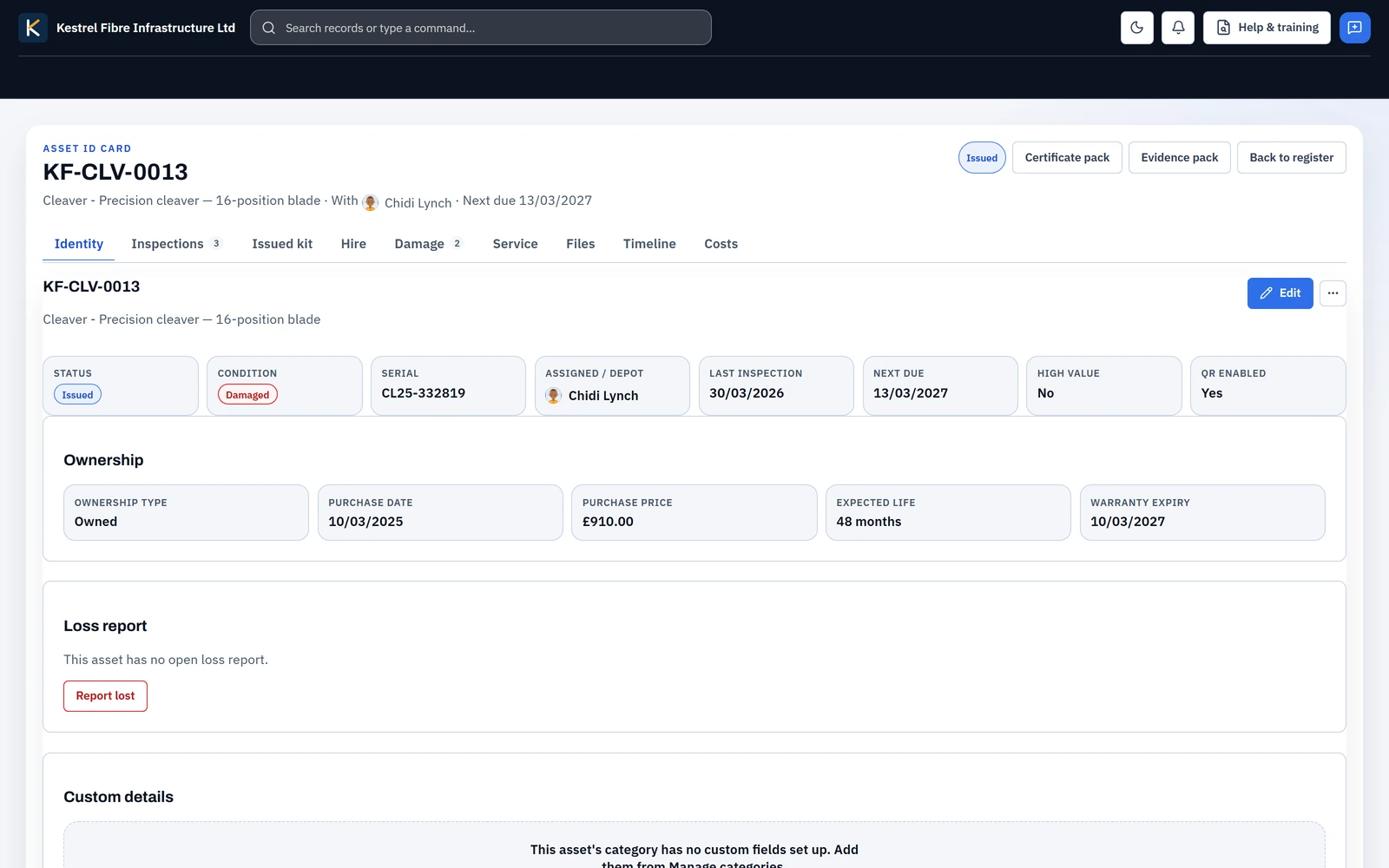
Real product screenshot, fictional sample company data. Asset record with status, condition, current holder and inspection dates.
History attached to the item, not to a spreadsheet.
Inspections are recorded against the asset itself, so its condition over time is a record rather than a recollection. When an item’s fitness is questioned, its history answers.
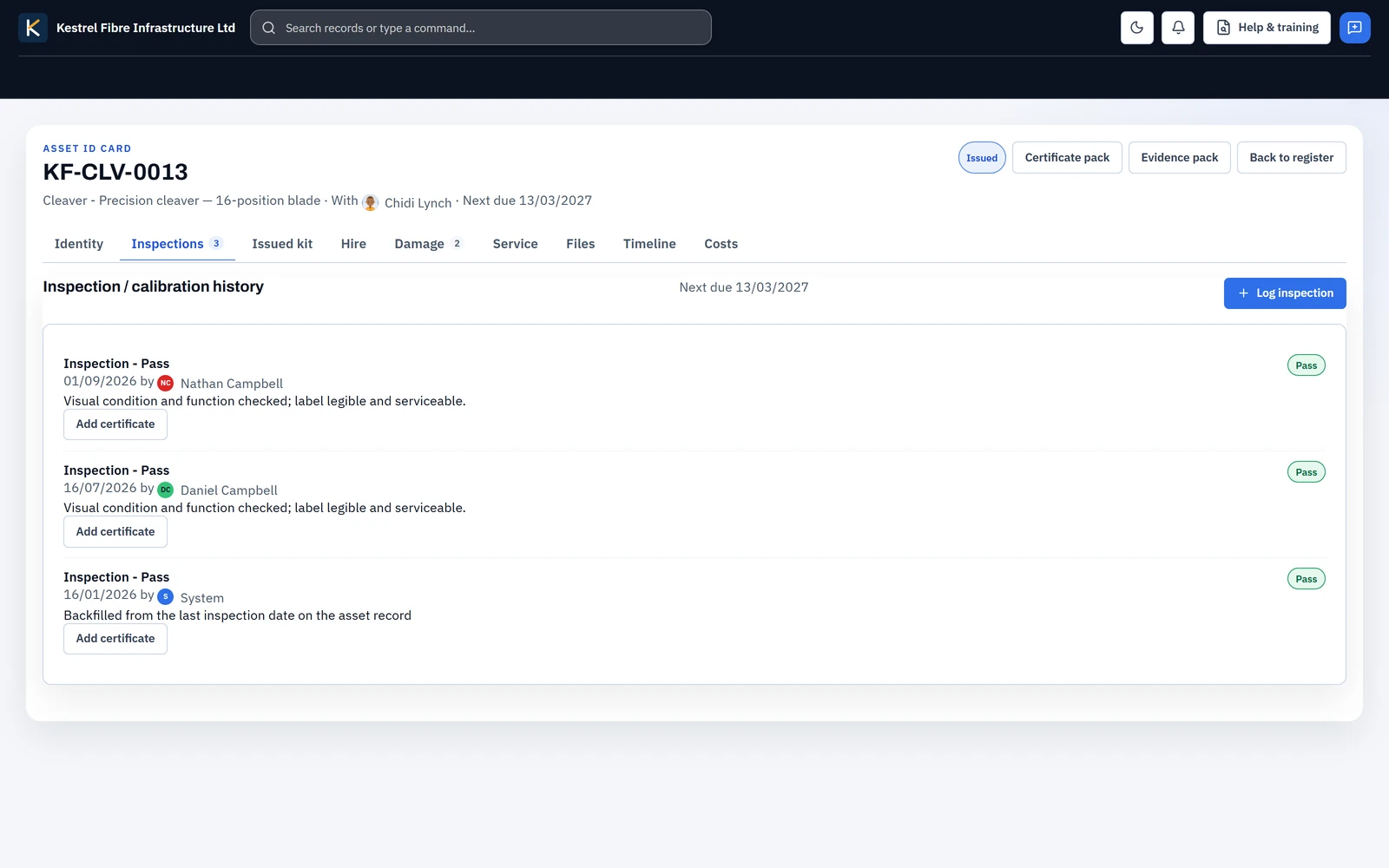
Know who holds it, and who held it before.
Who holds an item, and who held it before, stays on the record. Recovering equipment from a leaver, or establishing who had something when it was damaged, is a lookup.
Raise the fault where you find it.
A QR card on the item opens a tap-to-report route straight from a scan. The person who found the problem raises it, at the item, without needing an account structure explained to them first.
Keep the quote attached to the work.
Work sent out to a vendor keeps its quote attached to the job, so what was authorised and what was charged stay on the same record as the asset they relate to.
Follow the item through its working life.
Inspections stay against the asset, so its condition over time is a record rather than a recollection.
Tracked individually, or tracked by movement.
An asset is an item worth following on its own; it has a history, an owner and an inspection record. Stock is counted and moved rather than individually tracked: consumables, kits and the contents of a store or van. A ladder is an asset; the cable ties on the same van are stock.
Both are part of the same platform, and both connect to the jobs they are used on.
Frequently asked questions
What is the difference between assets and stock?
An asset is an item worth following on its own; it has a history, an owner and an inspection record. Stock is counted and moved rather than individually tracked: consumables, kits and the contents of a store or van. A ladder is an asset; the cable ties on the same van are stock.
How does someone report a problem with an asset?
A QR card on the item opens a tap-to-report route straight from a scan. The person who found the problem raises it at the item, without needing an account structure explained to them first.
Do assets and stock work together?
Yes. Both are part of the same platform, and both connect to the jobs they are used on.
Start with a focused demo.
Tell us how your operation runs. A person reviews the request and arranges a demo.